
Projects

2026 Best Air Heat Exchangers for Global Buyers

Global buyers are entering 2026 with tighter energy targets, unstable operating costs, and more demanding indoor-air requirements. The right Air Heat Exchanger must perform reliably, not merely look efficient on a catalogue page. In real facilities, a dusty warehouse, salty coastal air, or freezing winter morning can change the result.

The International Energy Agency’s The Future of Cooling report estimates that space-cooling electricity demand could more than triple by 2050 under current policies. Its Energy Efficiency 2023 analysis also identifies cooling as a major contributor to global electricity consumption. These findings strengthen the case for efficient ventilation and heat-recovery equipment. The practical question is less dramatic: how much energy can a unit recover after filters become dirty?

This 2026 guide compares leading air heat exchanger options for international purchasers. It considers sensible and latent recovery, pressure drop, leakage control, frost protection, corrosion resistance, service access, and total operating cost. AHRI Standard 1060 and EN 308 provide useful reference points for testing and performance comparison. However, test conditions do not represent every building. That matters.

A unit achieving high laboratory effectiveness may disappoint in a humid factory or a dusty retail site. Climate data, airflow balance, fan power, maintenance skills, and local spare-parts support deserve equal attention. Manufacturer claims should be checked against certified performance documents and project references. This is where product selection becomes engineering work.

Some market forecasts differ because they define “heat exchanger” differently. Buyers should treat headline market numbers carefully. The strongest choice is not always the most expensive model. It is the system that delivers measurable recovery, stable airflow, safe materials, and predictable service over many operating seasons.
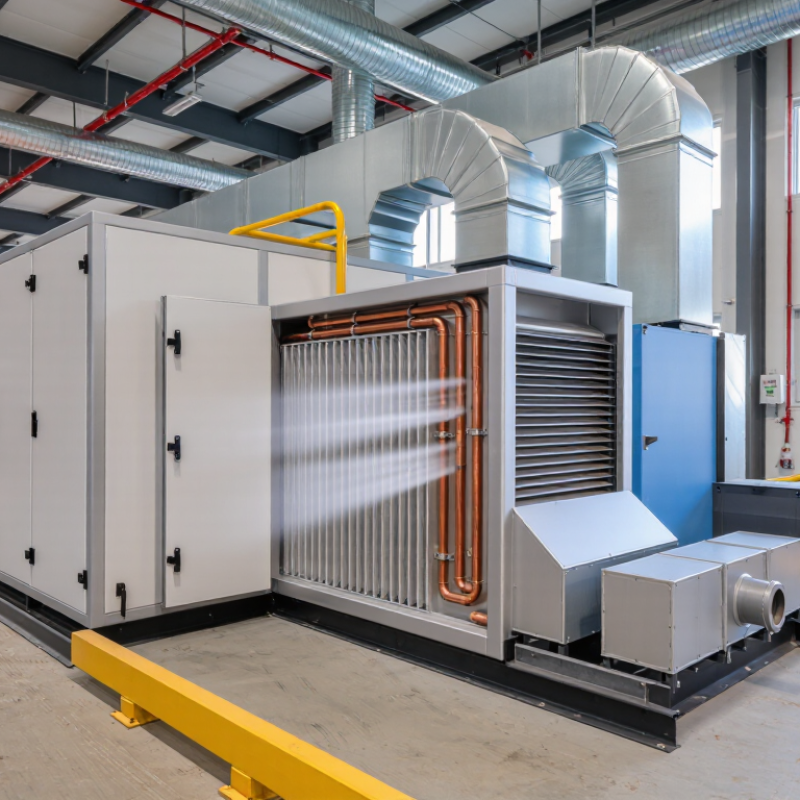
2026 Best Air Heat Exchangers for Global Buyers

Air Heat Exchanger Fundamentals and Operating Principles

Air heat exchangers transfer thermal energy between air streams without mixing them. A warm exhaust stream can preheat incoming outdoor air, reducing the load on heating equipment. In cooling mode, the same principle can lower ventilation air temperature.

The core parts include heat-transfer surfaces, air passages, seals, fans, and controls. Heat moves from the warmer air toward the cooler air through metal plates, coils, heat pipes, or rotating media.

Counterflow arrangements usually improve temperature effectiveness because the air streams maintain a useful temperature difference longer. However, higher effectiveness can increase pressure drop, fan energy, and maintenance demands.

Moisture may also condense when surface temperature falls below the dew point. Drainage and corrosion resistance matter.

Tips: Check airflow, temperature, humidity, pressure drop, and leakage during commissioning. Clean filters before judging exchanger performance. Dust changes the results quickly. Specify entering conditions, altitude, operating hours, and required recovery efficiency. A neat selection sheet can still mislead if seasonal conditions are ignored. Real performance may differ from laboratory ratings, especially when frost, bypass air, or uneven airflow appears. Allow inspection access and verify sensor calibration regularly. Reliability often depends less on peak efficiency than on stable operation and practical maintenance.

Key Performance Criteria for Selecting Air Heat Exchangers in 2026

Selecting an air heat exchanger in 2026 requires more than comparing catalog capacity. Start with the actual air volume, inlet temperature, humidity, and operating hours. A unit rated at 10,000 cubic meters per hour may perform differently in a dusty plant. Confirm thermal effectiveness under your design conditions, not only laboratory airflow.

Pressure drop deserves equal attention. Excess resistance increases fan energy and operating costs. During commissioning, measure airflow and pressure across the exchanger at several damper positions. Small leaks matter. Inspect fin spacing, tube geometry, and access panels for cleaning. Closely spaced fins can improve heat transfer, but they may clog quickly in workshops, agricultural buildings, or coastal environments. I have seen projected savings weaken after neglected filters raised resistance.

Material selection should match moisture, chemicals, and maintenance habits. Aluminum fins may suit many applications, while protective coatings can help in corrosive air. Verify corrosion tests, weld quality, leak testing, and control-system compatibility through traceable documents. Safety certifications and applicable local standards should be checked before purchase. Warranty terms are useful, but service response and spare-part availability often decide real uptime. A perfect calculation can still fail when technicians cannot reach the coil. Leave room for inspection. That detail is easy to miss.

2026 Best Air Heat Exchangers for Global Buyers - Key Performance Criteria for Selecting Air Heat Exchangers in 2026
Air Heat Exchanger Configuration Typical Heat-Recovery Effectiveness Typical Airflow Range Typical Air-Side Pressure Drop Suitable Operating Temperature Moisture Transfer Key Advantages Main Selection Limitations Common Applications
Finned-Tube Coil Approximately 45–75% sensible effectiveness, depending on coil depth, fin spacing, face velocity, and temperature conditions. About 500–100,000 m³/h per coil assembly; larger systems may use multiple modules. Approximately 50–300 Pa for a clean, properly selected coil. Commonly used from about −40°C to 120°C; material, seals, and fluid determine the final limit. Normally sensible heat only; condensate may form during cooling below the air dew point. Robust construction, flexible refrigerant or fluid circuits, easy capacity control, and broad HVAC availability. Requires regular coil cleaning; fin fouling and condensate management can reduce performance. Air-handling units, heat pumps, process cooling, industrial ventilation, and heating or cooling coils.
Plate-Fin Air-to-Air Core Approximately 60–85% sensible effectiveness in well-designed counterflow or cross-counterflow arrangements. About 100–50,000 m³/h per module, with larger capacities achieved through parallel sections. Approximately 100–400 Pa per air stream, depending on fin density and face velocity. Typically about −40°C to 90°C for standard construction; high-temperature designs require suitable materials and seals. Usually sensible-only when constructed with non-permeable metal plates; no intentional moisture transfer. Compact design, low cross-contamination risk, no moving parts, and good thermal performance per unit volume. Frost can restrict winter operation; narrow passages require effective filtration in dusty environments. Commercial ventilation, data-center ventilation, clean manufacturing areas, and energy-recovery air handlers.
Membrane Enthalpy Exchanger Approximately 60–85% sensible effectiveness and 40–75% latent effectiveness, depending on membrane type and humidity conditions. About 200–30,000 m³/h per module. Approximately 100–350 Pa per air stream. Commonly about −30°C to 60°C; membrane compatibility must be verified for the intended humidity and contaminants. Transfers both sensible heat and part of the water vapor while limiting bulk-air mixing. Reduces ventilation heating and cooling loads, especially in humid or very dry climates. Membranes can be sensitive to oil aerosols, solvents, dust, and liquid water carryover. Offices, schools, residential ventilation, hospitals, and humidity-sensitive commercial buildings.
Rotary Heat and Moisture Exchanger Approximately 70–90% sensible effectiveness and 50–85% latent effectiveness, depending on wheel speed, purge design, and operating conditions. About 1,000–150,000 m³/h per wheel assembly. Approximately 100–300 Pa per air stream. Typically about −40°C to 65°C for standard HVAC designs; higher temperatures require specialized wheel materials. Can transfer sensible heat and moisture; sorbent coating determines latent performance. High recovery efficiency, compact footprint, and good performance across large airflow volumes. Contains moving parts; cross-contamination, purge-air requirements, seals, and motor maintenance must be assessed. Large commercial buildings, airports, industrial ventilation, and central air-handling systems.
Heat-Pipe Heat Exchanger Approximately 40–70% sensible effectiveness under suitable orientation and temperature conditions. About 1,000–80,000 m³/h per assembly. Approximately 75–250 Pa per air stream. Commonly about −30°C to 100°C; the working fluid and casing material define the operating envelope. Sensible heat transfer only; separate airstreams remain physically isolated. No compressor or pump, low maintenance, and useful for transferring heat between supply and exhaust ducts. Performance depends on installation orientation, temperature difference, and correct heat-pipe sizing. Ventilation heat recovery, exhaust-air cooling, process exhaust, and retrofit energy-saving projects.
Direct-Contact Air-to-Air Cooler Approximately 50–85% cooling effectiveness, depending on water temperature, contact area, and humidity conditions. About 5,000–200,000 m³/h per system. Approximately 100–400 Pa, excluding external pumps and water-system losses. Generally used for above-freezing air streams; freeze protection is required in cold climates. Transfers both heat and moisture through evaporation; outlet humidity can increase substantially. Low water temperature requirements and effective sensible cooling in dry climates. Needs water treatment, drift control, hygiene management, and protection against mineral scaling. Data centers in suitable climates, industrial cooling, agricultural facilities, and large ventilation systems.
Heat-Recovery Condensing Coil Approximately 50–80% total heat-recovery potential when sensible and condensation heat are both utilized. About 1,000–100,000 m³/h per coil bank. Approximately 100–350 Pa for the air side, depending on coil geometry and condensate load. Commonly about −20°C to 80°C for HVAC service; corrosion-resistant materials may be required for aggressive exhaust air. Recovers sensible and latent heat when exhaust moisture condenses on the coil surface. Useful for humid exhaust streams and can provide measurable latent-energy recovery. Requires drain pans, traps, frost control, corrosion protection, and frequent inspection in contaminated air. Laundries, commercial kitchens, swimming-pool facilities, industrial exhaust, and humid process ventilation.
High-Temperature Gas-to-Air Recuperator Approximately 50–85% sensible effectiveness, depending on temperature ratio, flow arrangement, and refractory or metallic design. About 1,000–100,000 m³/h per unit. Approximately 200–1,000 Pa per air stream, with higher values possible in compact high-temperature designs. Approximately 200°C to 1,000°C or higher for specialized ceramic or metallic systems. Sensible heat transfer only. Recovers high-grade heat from combustion or process exhaust and can reduce fuel consumption. Requires careful thermal expansion design, suitable refractory or alloy materials, and protection from corrosive particulates. Furnaces, kilns, ovens, thermal oxidizers, combustion-air preheating, and industrial process heating.
Indicative engineering ranges only. Actual performance depends on airflow balance, inlet temperature and humidity, face velocity, filtration, fouling level, altitude, material selection, control strategy, and the applicable design and safety standards.

Comparison of Leading Air Heat Exchanger Types and Applications

Choosing the best air heat exchanger in 2026 starts with the air stream, not a catalog ranking. Plate-fin units suit compact ventilation systems because their layered passages transfer heat efficiently. They are clean, lightweight, and relatively simple to inspect. However, narrow channels can collect dust in workshops or poorly filtered buildings. Pressure loss may also rise faster than expected. Keep it practical.

Tube-fin exchangers tolerate larger particles and harsher outdoor conditions. Their wider passages support easier cleaning, making them useful for agricultural buildings, factories, and engine-room ventilation. They usually need more space than plate-fin designs.

Rotary heat exchangers recover both sensible and latent heat, which benefits offices in cold or humid climates. Yet their moving wheel requires seals, bearings, and regular maintenance. Small leakage can reduce performance.

Heat-pipe exchangers transfer heat without moving parts between air streams. They fit reliable ventilation in hospitals, laboratories, and temperature-sensitive rooms, although installation orientation can affect output. Run-around coil systems separate supply and exhaust ducts with pumped fluid. This arrangement works well when ducts are far apart, but pumps add energy use and maintenance points.

Field checks should measure airflow, filter condition, temperature difference, and pressure drop. A neat spreadsheet rarely captures noise, access space, or seasonal fouling. The comparison remains imperfect. Duty conditions change.

Global Standards, Energy Efficiency, and Environmental Requirements

Global buyers choosing air heat exchangers in 2026 should examine standards before comparing prices. Requirements differ across regions, especially for safety, electrical controls, pressure resistance, and material performance. Ask suppliers for current test reports, traceable data, and clear operating limits. Accredited laboratory results are more dependable than attractive catalogue figures.

Energy efficiency depends on real conditions. A unit may show excellent recovery at a standard airflow, yet perform poorly with dust, humidity, or pressure changes. Check thermal effectiveness, fan energy, air leakage, and maintenance access. During commissioning, measure airflow and temperature at several points. Small installation errors can erase expected savings. They happen often.

Tips: Select corrosion-resistant surfaces for coastal or industrial sites. Require washable filters and accessible inspection panels. Review the exchanger’s full life cycle, not only its purchase cost. Recyclable aluminium and steel can reduce environmental impact, while durable coatings may extend service life. If the system includes refrigerants, confirm their environmental profile and local compliance. Do not accept vague claims such as “eco-friendly” without supporting evidence. A practical weakness remains: global standards are not fully uniform, so buyers should confirm local certification with an engineer or qualified inspection body before ordering.

Purchasing, Installation, Maintenance, and Lifecycle Cost Considerations

2026 Best Air Heat Exchangers for Global Buyers

Purchasing decisions should begin with airflow, temperature range, humidity, and pressure-drop limits. A larger exchanger is not automatically better. Excess surface area may increase cost and cleaning time. UNEP’s 2023 Global Status Report states that buildings consume about 30% of global final energy. Therefore, recovery efficiency matters, but fan power matters too. Ask suppliers for tested performance at your actual airflow, not only rated conditions.

Installation quality directly affects lifecycle cost. Keep service access clear around filters, coils, drains, and inspection panels. Poor duct alignment can create leakage, vibration, and uneven airflow. ASHRAE guidance emphasizes commissioning, balancing, and verified ventilation performance. In practical reviews, a common mistake is selecting high-efficiency equipment without checking replacement-filter availability. That choice can become expensive in remote locations. Maintenance records should track pressure drop, cleaning dates, corrosion, and measured temperature recovery. Real performance often declines quietly.

Tips: Compare five-year and fifteen-year costs. Include energy, filters, labor, downtime, and disposal. Require corrosion protection for coastal sites. Confirm local technicians can service the unit. A simple inspection lamp helps reveal blocked passages. Recheck assumptions. They may be wrong. The IEA’s Energy Efficiency 2023 report also identifies building efficiency as a major route for reducing energy demand, supporting careful investment beyond the purchase price.