Projects

2026 Top Custom Stainless Steel Fabrication Suppliers

Choosing among the 2026 top custom stainless steel fabrication suppliers requires more than comparing polished websites. Buyers need evidence of process control, material traceability, welding competence, and dependable delivery.

World Stainless reported global crude stainless steel production of approximately 62.6 million tonnes in 2024. This volume reflects strong demand across construction, food processing, medical equipment, energy, and transportation. Grand View Research also identifies stainless steel as a growing industrial market, supported by corrosion resistance and long service life. These figures show opportunity, but they do not prove that every supplier can deliver consistent fabrication quality.

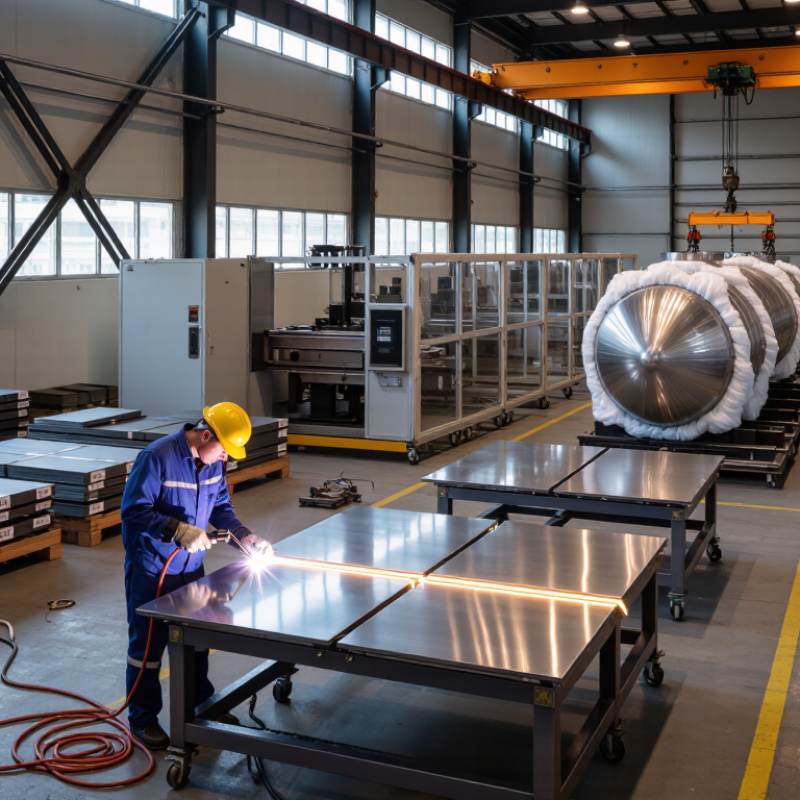
The right supplier should explain its grade selection, including 304, 316L, duplex, and heat-resistant alloys. It should provide mill certificates, welding procedure qualifications, inspection records, and clear tolerances. Look for practical evidence: clean weld beads inside a process tank, uniform brushing on a visible panel, and protected edges after packing. ISO 9001 certification can support quality management, although certification alone is not enough. Experience matters.

No ranking is perfect. Supplier capabilities change. A company with excellent equipment may still communicate poorly or miss shipment dates. Therefore, this guide evaluates the 2026 top custom stainless steel fabrication suppliers through technical capability, project experience, quality systems, production capacity, customization, and customer support. Buyers should verify current certifications and references before signing contracts. The details matter. A small documentation gap can become an expensive installation problem.
2026 Top Custom Stainless Steel Fabrication Suppliers

What Is Custom Stainless Steel Fabrication?

Custom stainless steel fabrication is the process of turning stainless sheet, tube, or plate into parts made for a specific project. Unlike standard stock products, each piece follows a customer’s dimensions, function, and installation conditions. Fabricators may cut, bend, roll, weld, drill, and polish the metal. The work can produce kitchen counters, medical enclosures, processing tanks, railings, and machine guards.

Good fabrication begins with a practical drawing. Measurements, material grade, wall thickness, weld locations, and surface finish must be checked before cutting. For example, a 2-millimeter sheet may suit a light enclosure but fail under repeated impact. A skilled fabricator also considers heat distortion, drainage, cleaning access, and fitting space. Small details matter.

Experience helps prevent expensive mistakes. Welders control heat to reduce discoloration and warping. Inspectors check dimensions, joint quality, surface defects, and sharp edges. Finish selection also affects performance: a smooth surface is easier to clean, while a textured finish can hide minor marks. However, custom work is not always perfect. A first drawing may overlook a hidden bracket or service gap. Careful review, sample fitting, and honest communication can correct these weaknesses before final production. Reliability comes from documented measurements, traceable materials, and consistent quality checks.

2026 Top Custom Stainless Steel Fabrication Suppliers — What Is Custom Stainless Steel Fabrication?

Custom stainless steel fabrication is the process of cutting, forming, welding, machining, and finishing stainless steel to meet a specific design, size, tolerance, and application requirement. The chart compares the minimum specified tensile and yield strengths of commonly fabricated stainless steel grades in the annealed condition. Actual values may vary by product form and applicable material standard.

How to Evaluate Stainless Steel Fabrication Suppliers in 2026

Evaluating a stainless steel fabrication supplier in 2026 requires evidence, not impressive machinery photos. World Stainless reported approximately 62.6 million tonnes of crude stainless production in 2024. That scale increases choice, but also makes traceability more important. Request heat numbers, mill test certificates, PMI records, and a sample traveler from raw sheet to packed assembly. Confirm grade, thickness tolerance, surface finish, and applicable ASTM or EN requirements. Ask who approves material substitutions.

Capability must match your actual geometry. Review welding procedure specifications, welder qualifications, bend-test results, and inspection plans. For laser-cut or formed parts, request first-article data with measured tolerances.

A supplier should explain its calibrated equipment and corrective-action process. Deloitte’s 2024 Smart Manufacturing and Operations Survey found that 92% of manufacturers viewed smart manufacturing as important for competitiveness. Digital dashboards help. They cannot repair poor weld penetration.

Commercial evidence matters too. Compare quoted lead times with the supplier’s last twelve-month on-time delivery data. Check peak-season capacity, subcontracting controls, packaging, and nonconformance rates. International Trade Centre Trade Map data shows stainless-related trade remains highly global, so logistics and customs documents deserve early review.

A low price can hide rework, freight, or late engineering changes. That warning sounds obvious. It is often ignored.

Evaluate one pilot batch before awarding recurring volume, and record what went wrong, not only what passed.

Key Services Offered by Leading Fabrication Suppliers

Leading stainless steel fabrication suppliers provide more than cutting and welding. Their services usually begin with design review, material selection, and manufacturability checks. Experienced engineers examine bend radii, joint access, and tolerance requirements before production starts.

Core services include laser cutting, CNC bending, precision forming, TIG welding, and custom assembly. Suppliers may also provide grinding, brushing, polishing, passivation, and protective finishing. These details affect corrosion resistance and surface appearance.

For food, medical, or architectural applications, suppliers should offer material certificates, weld inspection records, and traceable quality reports. Clear documentation builds trust.

Many suppliers support prototypes, low-volume runs, and repeat production. They can adjust fixtures, improve drawings, and reduce unnecessary welding points. However, a polished quotation does not guarantee smooth manufacturing. One weakness in many projects is incomplete technical communication. Small details, such as a hidden weld or drainage gap, can cause delays later. That deserves more attention.

Tips: Share complete drawings, grade requirements, surface standards, and delivery expectations. Ask how inspections are performed. Request sample photos or a prototype when appearance matters. Review every tolerance carefully; overly strict dimensions can increase cost without improving performance.

Industries Served by Custom Stainless Steel Fabricators

Custom stainless steel fabricators serve demanding industries where corrosion control, cleanability, and repeatable dimensions affect daily operations. Food and beverage plants use stainless worktables, tanks, conveyors, washdown frames, and hygienic pipe supports. The material must tolerate hot water, detergents, salt, and constant contact with products. A polished surface helps, but it is not automatically hygienic. Weld quality and drainage still matter.

58.4 million tonnes

World Stainless reported approximately 58.4 million tonnes of stainless crude steel production in 2023.

6.6% annually

Grand View Research projects the global stainless steel market to expand at about 6.6% annually from 2024 to 2030.

This scale reflects sustained demand across processing, construction, transport, and medical applications. Fabricators therefore support more than factories. They build cleanroom cabinets, pharmaceutical vessels, hospital carts, commercial kitchen systems, and coastal equipment.

Each sector requires different decisions.

Pharmaceutical users often request orbital-welded tubing, documented material grades, and controlled surface finishes. Medical facilities may prioritize smooth corners and simple disinfection. Marine operators need stronger protection against chloride exposure. Small details count.

A poorly placed drain can create standing water. A thin bracket can vibrate loose. In practice, suppliers should review drawings, cleaning routines, load data, and installation access before cutting metal.

That step is sometimes skipped, and the final installation suffers. Industry reports show market growth, but they cannot replace site experience, inspection records, and honest tolerance discussions.

How to Select the Right Supplier for Your Project

2026 Top Custom Stainless Steel Fabrication Suppliers

How to Select the Right Supplier for Your Project

Choosing a custom stainless steel fabrication supplier starts with your project’s actual demands. Review material grades, wall thicknesses, weld types, surface finishes, and dimensional tolerances. A supplier should explain these choices clearly, not simply repeat your drawings. Ask for recent project examples with similar sizes, shapes, and production volumes. I have found that practical experience often reveals problems before fabrication begins.

Request material certificates, weld procedure records, inspection reports, and clear traceability documents. Confirm whether the supplier can manage cutting, forming, welding, polishing, assembly, and packaging in one controlled process. Their workshop should show organized storage, calibrated measuring tools, and protection against surface contamination. Do not trust impressive photographs alone.

Tips: Compare complete quotations, not unit prices. Check tooling charges, sampling costs, inspection methods, delivery terms, and change-control procedures. Ask how they handle a failed weld or a dimensional error. The answer matters.

A capable supplier will identify risks in your design and suggest measurable improvements. However, recommendations should remain documented and technically justified. One weakness in my own evaluations was focusing too heavily on delivery speed. Later, unclear inspection responsibilities caused avoidable delays. Define acceptance criteria before production starts. Arrange a sample inspection when tolerances are tight. Keep communication written, especially after design revisions. A reliable partner admits limitations, reports defects early, and provides evidence instead of promises.

2026 Top Custom Stainless Steel Fabrication Suppliers - How to Select the Right Supplier for Your Project

A practical, brand-neutral evaluation matrix for comparing custom stainless steel fabrication suppliers against documented technical, quality, production, and commercial requirements.

Evaluation Dimension Recommended Benchmark What to Request from the Supplier Why It Matters Selection Priority
Material Grade and Traceability 304/304L for general corrosion resistance; 316/316L where increased chloride or chemical resistance is required. Material test certificates, heat or lot numbers, grade confirmation, and traceability from raw material to finished parts. Correct alloy selection affects corrosion resistance, weldability, service life, and compliance with the design specification. Critical
Require before production.
Material Standards Sheet and plate commonly specified to ASTM A240/A240M or an applicable EN standard. Declared material standard, thickness tolerance, chemical composition, mechanical properties, and certificate format. Recognized standards provide a consistent basis for material acceptance and incoming inspection. Critical
Match the project drawings.
Fabrication Processes Capabilities should match the design: laser or waterjet cutting, press-brake forming, TIG/MIG welding, machining, grinding, and assembly. Process list, equipment capacity, maximum work envelope, sample parts, and details of any outsourced operation. A supplier with the required processes in-house can reduce handoffs, dimensional variation, and communication risk. High
Verify for complex parts.
Dimensional Control Use drawing-defined tolerances and GD&T; avoid accepting a generic tolerance claim without a controlled drawing review. Inspection plan, calibrated measuring equipment list, first-article report, and sample dimensional inspection records. Fabricated assemblies may fail during installation when flatness, hole location, bend angle, or fit-up is not controlled. Critical
Especially important for assemblies.
Welding Quality Welding procedures should identify joint design, filler metal, shielding gas, heat input controls, and inspection requirements. Welding procedure documents, welder qualification evidence where applicable, weld maps, and visual inspection criteria. Proper welding control reduces distortion, contamination, porosity, cracking, and premature corrosion at weld zones. Critical
Essential for pressure, sanitary, and structural work.
Surface Finish Specify the required finish by a recognized description or measurable roughness requirement, such as a stated Ra value where applicable. Finish samples, polishing sequence, roughness measurement method, grain direction requirement, and protective-film procedure. Surface condition affects appearance, cleanability, corrosion behavior, and suitability for food, pharmaceutical, or architectural applications. High
Define before quotation.
Quality Management A documented quality management system aligned with ISO 9001:2015 is a strong purchasing benchmark. Current certificate, scope of certification, corrective-action process, internal inspection records, and nonconformance procedure. A controlled system improves repeatability, document control, root-cause analysis, and delivery consistency. High
Confirm certificate validity and scope.
Inspection and Testing Inspection should be based on risk and drawing requirements; common checks include dimensions, weld appearance, material identity, and surface condition. Inspection and test plan, inspection reports, calibration records, photographs, and any required NDT or leak-test results. Objective evidence is more reliable than a general statement that the parts are “fully inspected.” Critical
Define acceptance criteria in the purchase order.
Prototype and First-Article Support Supplier should be able to review drawings, identify manufacturability risks, and produce a controlled prototype or first article. Design-for-manufacturing feedback, revision-control method, first-article timeline, and change-approval workflow. Early engineering feedback can prevent expensive rework before volume production begins. High
Recommended for new designs.
Production Capacity Capacity should be demonstrated against the required batch size, material thickness, part dimensions, and production schedule. Monthly capacity estimate, current loading, equipment availability, staffing plan, and contingency plan for critical operations. A supplier may be technically capable but unable to maintain quality and delivery performance at the required volume. High
Validate with a production plan.
Lead Time and Schedule Control Lead time should be quoted from a defined point, such as receipt of approved drawings, materials, or purchase order. Detailed schedule covering engineering review, material purchasing, fabrication, finishing, inspection, packing, and shipment. Clear schedule assumptions prevent disputes caused by unapproved drawings, material shortages, or late design changes. High
Use milestone dates.
Packaging and Shipping Protection Packaging should protect stainless steel from scratching, carbon-steel contamination, moisture, and deformation during transport. Packaging specification, separation materials, lifting points, corrosion-protection method, pallet details, and shipping photographs. Finished surfaces can be damaged or contaminated after fabrication if handling and packaging are not controlled. Medium
Increase priority for polished parts.
Commercial Transparency Quotation should clearly separate material, fabrication, finishing, tooling, inspection, packaging, freight, taxes, and payment terms. Itemized quotation, validity period, assumptions, excluded work, currency, delivery terms, and change-order pricing. Transparent pricing allows a fair comparison and reduces unexpected charges during production. High
Compare like-for-like scope.
Supplier Communication A designated technical contact should provide prompt, documented responses and maintain revision control. Communication process, response-time commitment, escalation path, project reporting format, and approved document-sharing method. Fast and accurate communication reduces errors caused by outdated drawings, unclear specifications, or unapproved substitutions. High
Assess during the quotation stage.
Total Cost of Ownership Evaluate quality, yield, rework, inspection, logistics, warranty exposure, and lifecycle performance—not only unit price. Cost breakdown, yield assumptions, warranty terms, rework policy, replacement procedure, and historical quality metrics where available. The lowest quotation can become more expensive if it causes installation delays, rework, field failures, or repeated inspections. Critical
Use a weighted comparison score.

Practical recommendation: Shortlist suppliers that satisfy all critical requirements first, then compare technical capability, documented quality evidence, schedule reliability, communication, and total cost. Final acceptance criteria should always be stated in the approved drawings, specifications, and purchase order.