Projects

How to Find Reliable Custom Steel Fabrication in 2026?

Finding reliable custom steel fabrication in 2026 requires more than comparing hourly prices. It requires evidence. The World Steel Association’s World Steel in Figures 2025 reports that global crude steel production remained near 1.9 billion tonnes in 2024. That scale creates opportunity, but it also increases supplier risk. A low quotation may conceal weak traceability, inconsistent welding, or unrealistic delivery promises.

Look for documented quality systems, qualified welders, material certificates, welding procedure specifications, and non-destructive testing records. Ask whether the fabricator can explain each step from drawing review to final inspection. Certifications such as ISO 9001 or AISC accreditation can support confidence, but certificates alone are not enough. Inspectors should still verify heat numbers, weld maps, dimensional tolerances, and coating thickness. Small details matter.

Edwin Basson, Director General of the World Steel Association, has said, “Steel is essential to modern life.” His point extends beyond the material itself. A fabricated beam, platform, or machine frame must perform safely under real loads, weather, vibration, and time. In practice, a bright workshop can still hide weak documentation. I have sometimes seen buyers overvalue polished websites and undervalue inspection records. That is a mistake worth reconsidering. Deloitte’s 2025 manufacturing research also highlights ongoing pressure around supply-chain resilience, skilled labor, and production visibility. Reliable partners address those pressures openly. They provide realistic schedules, clear change-order rules, and measurable acceptance criteria. The best choice is rarely the cheapest bid. It is the supplier that can prove consistent workmanship before your steel reaches the jobsite.

How to Find Reliable Custom Steel Fabrication in 2026?

Defining Your Custom Steel Fabrication Requirements

Defining your custom steel fabrication requirements starts with the job site, not the fabricator. Record dimensions, load conditions, operating temperatures, connection details, surface finish, and installation limits. A drawing can look complete and still be incomplete. Note access routes, lifting equipment, indoor or outdoor exposure, and expected service life. These details prevent costly redesigns.

Material selection needs evidence. The World Steel Association reported 1,892.1 million tonnes of crude steel production in 2023, showing the scale of available grades and supply chains. Specify the grade, thickness range, weldability, corrosion protection, and required material certificates. Ask whether inspection records, weld procedures, and traceability documents will accompany the finished parts. Vague wording creates risk.

Budget and schedule should be measurable. Define acceptable tolerances, inspection points, packaging requirements, delivery dates, and approval stages. The International Energy Agency estimates that steel production creates about 8% of global energy-related and process CO2 emissions. A practical specification can request efficient nesting, reduced scrap, and recyclable packaging. These choices may also affect cost. Do not assume the cheapest quote is reliable. Compare what each proposal includes.

Experienced project teams often use a requirement checklist before requesting bids. Include drawings in revision control, a single contact person, and written acceptance criteria. Allow time for technical questions. I sometimes find that clients specify the steel grade but overlook drainage, fastener compatibility, or field repairs. That omission is easy to correct early. Later, it becomes expensive.

How to Find Reliable Custom Steel Fabrication in 2026?

Defining Your Custom Steel Fabrication Requirements

Material selection is a core fabrication requirement. The chart compares the minimum specified yield strength of commonly used steel specifications. These values are based on published ASTM requirements and can help buyers define structural performance before requesting a fabrication quote.

Values shown are minimum yield strengths in megapascals (MPa): ASTM A36 structural steel: 250 MPa; ASTM A572 Grade 50: 345 MPa; ASTM A500 Grade B structural tubing: 315 MPa; ASTM A240 Type 304 stainless steel: 205 MPa. Confirm the applicable specification, thickness range, testing requirements, and certification documents with your fabricator.

Evaluating Fabricators’ Capabilities, Certifications, and Experience

How to Find Reliable Custom Steel Fabrication in 2026?

Evaluating Fabricators’ Capabilities, Certifications, and Experience

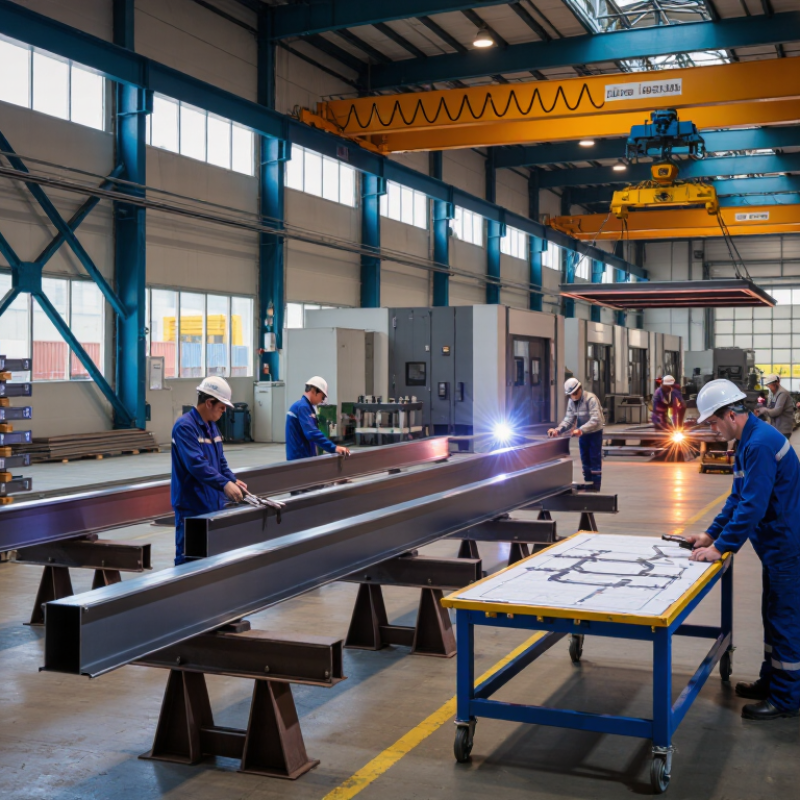
When I assess a steel fabricator, I start with its actual production capabilities. Capability must match your drawings, tolerances, materials, and delivery schedule. Ask for recent examples involving similar plate thicknesses, weld types, and finished dimensions. A serious shop should explain its cutting, forming, welding, machining, and inspection processes clearly. Look closely. Photographs can mislead.

Certifications matter, but certificates alone cannot prove dependable workmanship. Request current quality certificates and verify their scope, expiry dates, and issuing organizations. Check whether welding procedures and operator qualifications match your project requirements. For structural work, documented inspection methods are essential. Ask how the fabricator controls material heat numbers, weld records, coating thickness, and nonconformance reports. An auditor should find evidence, not promises.

Experience appears in small details. Experienced teams flag unrealistic bend radii, inaccessible welds, and tolerance conflicts before production begins. Ask who will manage your project and how often progress updates will arrive. A factory visit can reveal order, housekeeping, calibrated tools, and active quality checks. I once trusted an impressive sample too quickly; the delivery process later exposed weak communication. That mistake changed my evaluation method. Now I compare references, inspection records, lead times, and corrective actions together. No checklist is flawless. Still, careful questions usually separate capable fabricators from polished sales conversations.

Comparing Materials, Manufacturing Processes, and Quality Standards

Reliable custom steel fabrication starts with material selection, not the quotation. Carbon steel suits frames, brackets, and general structural work. Stainless steel performs better around moisture, chemicals, and demanding hygiene conditions. Alloy steel may offer greater strength, but it can require tighter heat-treatment control. Ask for mill certificates, heat numbers, and verified material grades. Small detail, major evidence.

Manufacturing methods also affect cost and accuracy. Laser cutting creates clean edges for thin and medium plate. Plasma cutting handles thicker sections quickly, though it may leave more heat distortion. Waterjet cutting protects heat-sensitive materials but usually costs more. Bending should include springback allowances, while welding needs qualified procedures and trained operators. Inspect sample parts for warping, rough edges, and inconsistent weld profiles.

Quality standards should match the project risk. ISO 9001 supports controlled documentation and corrective actions. ASTM or equivalent specifications help verify material performance. Welding work may require documented procedures, welder qualifications, and visual or nondestructive testing. Request dimensional reports, coating records, and inspection photographs. Traceability should follow each part from incoming steel to final packing. A practical warning remains: paperwork can look complete while measurements are wrong. Independent checks with calibrated tools are still necessary. Even experienced teams occasionally miss a small tolerance, so critical dimensions deserve repeated inspection.

How to Find Reliable Custom Steel Fabrication in 2026? Comparing Materials, Manufacturing Processes, and Quality Standards
Evaluation Dimension Common Option Typical Characteristics Best-Fit Applications Reliability Indicators to Verify Relative Cost
Structural Material Carbon Structural Steel High strength, weldable, widely available, and generally easy to machine. Corrosion protection is normally required for outdoor exposure. Frames, platforms, brackets, supports, base plates, and general industrial structures. Mill test report, specified yield and tensile strength, heat or batch traceability, weld procedure qualification, and dimensional inspection. Low to Medium
Structural Material Weathering Steel Forms a protective surface patina in suitable atmospheric conditions. It is not appropriate for continuously wet, marine, or highly polluted environments without engineering review. Architectural structures, bridges, outdoor enclosures, and exposed plate components. Environmental suitability assessment, chemistry verification, plate traceability, drainage design, and coating or maintenance plan where required. Medium
Corrosion-Resistant Material Austenitic Stainless Steel Good corrosion resistance and formability. Some grades may be susceptible to chloride-related pitting or stress corrosion cracking. Food-processing equipment, chemical equipment, architectural components, tanks, and sanitary assemblies. Material certificate, grade verification, surface-finish requirement, weld-cleaning procedure, passivation record, and contamination controls. Medium to High
Corrosion-Resistant Material Duplex Stainless Steel Higher strength and strong resistance to many chloride environments, but welding requires tighter control of heat input and metallurgy. Marine equipment, pressure-containing components, chemical processing, and demanding industrial environments. Qualified welding procedure, heat-input control, ferrite or phase-balance testing where specified, corrosion requirements, and complete traceability. High
Lightweight Material Aluminum Alloy Low density and good corrosion resistance, with lower stiffness than steel. Welding can introduce distortion and strength loss in heat-affected zones. Transportation components, enclosures, access platforms, lightweight frames, and equipment guards. Alloy and temper certificate, qualified aluminum welding procedure, distortion-control plan, dimensional inspection, and surface-treatment verification. Medium to High
Cutting Process Laser Cutting High dimensional accuracy and a narrow heat-affected zone for sheet and plate within machine capacity. Thickness and reflective materials can affect productivity. Sheet-metal parts, precision brackets, covers, tabs, and repeat production. Cut-edge inspection, burr limits, kerf compensation, first-article approval, nesting records, and calibrated measuring equipment. Medium
Cutting Process Plasma Cutting Fast cutting for medium and thick plate, with a larger heat-affected zone and generally less edge precision than laser cutting. Heavy frames, structural plate, machinery bases, and large industrial components. Cut-quality acceptance criteria, bevel and squareness checks, slag removal, heat-distortion control, and plate traceability. Low to Medium
Forming Process Press-Brake Bending Produces controlled bends in sheet and plate. Accuracy depends on tooling, material springback, thickness variation, and setup control. Channels, cabinets, brackets, guards, frames, and folded structural components. Bend-angle inspection, tooling condition, springback compensation, bend-radius compliance, and documented setup parameters. Low to Medium
Forming Process Plate Rolling Forms cylindrical or conical sections. Edge preparation, roll alignment, and weld-seam positioning influence final geometry. Tanks, ducts, pressure-related shells, pipe sections, and large curved structures. Roundness and diameter checks, plate orientation records, longitudinal seam control, dimensional report, and non-destructive testing when required. Medium
Welding Process Gas Metal Arc Welding Productive and suitable for many carbon-steel, stainless-steel, and aluminum applications. Shielding-gas and parameter control are essential. General fabrication, frames, enclosures, production assemblies, and medium-volume work. Qualified welders, approved welding procedure, consumable control, pre-weld fit-up inspection, visual inspection, and repair records. Low to Medium
Welding Process Gas Tungsten Arc Welding Provides precise, clean welds with strong control of heat input, but is slower and more labor-intensive than many production welding methods. Thin sections, stainless assemblies, aluminum components, hygienic equipment, and visible welds. Qualified procedure, shielding-gas purity, tungsten and filler control, weld-profile inspection, cleanliness requirements, and controlled purge where applicable. Medium to High
Welding Process Submerged Arc Welding High deposition rate and consistent weld quality for long, straight seams and thick carbon-steel plate. It is less flexible for small or complex parts. Large beams, pressure-related shells, heavy plate assemblies, and long structural welds. Qualified procedure, flux and wire traceability, weld-parameter records, preheat monitoring, visual inspection, and non-destructive testing as specified. Medium
Inspection Method Visual Testing Checks weld appearance, surface discontinuities, profile, undercut, overlap, alignment, and general workmanship. It cannot detect all internal defects. All fabricated components as a basic inspection stage. Inspection checklist, acceptance criteria, inspector qualification, adequate lighting, calibrated gauges, and photographic or digital records where useful. Low
Inspection Method Ultrasonic Testing Detects many internal discontinuities in suitable materials and thicknesses without cutting the component. Results depend on technique and operator skill. Thick welds, critical structural joints, pressure-related components, and highly loaded parts. Written examination procedure, qualified personnel, calibrated equipment, reference blocks, scan coverage, and report linked to weld identification. Medium to High
Inspection Method Liquid Penetrant Testing Reveals surface-breaking defects on non-porous materials, including many stainless steels and non-ferrous alloys. It does not identify subsurface defects. Surface-critical welds, machined areas, stainless assemblies, and leak-sensitive components. Surface preparation records, approved penetrant system, dwell-time control, developer inspection, lighting requirements, and documented indications. Medium
Quality Standard ISO 9001 Quality Management System Defines a process-based framework for consistent production, document control, corrective action, risk consideration, and continual improvement. Most custom fabrication programs, especially repeat or multi-stage projects. Current certificate scope, certification validity, internal audit evidence, nonconformance process, calibration system, and traceable inspection records. System Requirement
Quality Standard ISO 3834 Welding Quality Requirements Addresses welding-specific quality controls, including personnel, procedures, equipment, consumables, inspection, and records. Fabricated assemblies where weld integrity and repeatability are critical. Applicable certification level, qualified welding coordinators, approved procedures, welder qualifications, consumable control, and welding records. System Requirement
Quality Standard Welding Procedure and Welder Qualification Demonstrates that a defined welding method and operator can produce welds meeting specified mechanical and workmanship requirements. Safety-critical, structural, pressure-related, and regulated fabrication. Procedure qualification record, valid welder qualification range, essential-variable control, continuity records, and repair-rate monitoring. Project-Dependent
Surface Protection Protective Coating System Paint or other coating systems reduce corrosion when surface preparation, environmental conditions, film thickness, and curing are controlled. Carbon-steel structures, outdoor equipment, marine-exposed components, and industrial enclosures. Specified preparation grade, surface profile measurement, environmental readings, dry-film thickness readings, batch records, and holiday testing where applicable. Low to High
Supplier Verification Documented Inspection and Traceability Package Connects materials, processes, inspections, deviations, and final acceptance to the delivered component or serial number. Custom parts requiring repeatability, regulatory evidence, maintenance support, or contractual acceptance. Material certificates, inspection plan, dimensional report, weld map, non-destructive testing reports, coating records, certificates of conformity, and revision control. Essential for Critical Work

Reviewing Quotes, Lead Times, Communication, and Contract Terms

A dependable custom steel fabricator should make every quote easy to compare. Ask for material grades, plate thicknesses, weld requirements, surface treatment, inspection steps, and delivery charges. A low price can hide exclusions. Check whether engineering, cutting, assembly, finishing, and packaging are included. Request an itemized quote with clear validity dates and payment milestones. I once reviewed a quote that looked attractive, but freight and inspection fees appeared later. That oversight changed the real cost considerably.

Lead time needs more detail than one promised delivery date. Ask for a schedule covering drawing approval, material purchasing, fabrication, quality checks, coating, and shipping. Confirm which tasks depend on your approvals. A fabricator should explain realistic delays, not offer perfect promises. Leave practical buffer time. Steel availability and rework can disrupt even careful plans.

Communication reveals working habits early. Send a technical question and observe the response. Is it specific, timely, and supported by drawings or measurements? Ask who manages revisions and how decisions are recorded. Your contract should define tolerances, inspection rights, approved materials, change orders, delivery conditions, warranty coverage, and remedies for missed requirements. Attach the final drawings and revision number. Do not rely on casual emails alone. I have learned this the hard way. Small wording gaps can create expensive disputes, even when both sides acted in good faith. Check references, inspection records, and production photographs before signing. Reliability is demonstrated through evidence, not confidence.

Verifying Production Quality Through Samples, Inspections, and Delivery Performance

Reliable custom steel fabrication begins with evidence, not polished promises. Request a recent sample made from the same grade, thickness, and welding process as your project. Examine cut edges, weld profiles, hole alignment, and coating coverage under bright light. A sample may look excellent while hiding poor traceability. That is where I have been wrong before.

Ask for material certificates, welding procedure records, welder qualifications, and dimensional inspection reports. Match heat numbers on certificates with markings on the steel. For critical frames, use independent inspection before painting and again before shipment. Check weld size, distortion, surface defects, and non-destructive testing results. The 2023 ISO Survey reported more than 1.2 million ISO 9001 certificates worldwide, but certification alone does not prove every fabricated part is acceptable.

Delivery performance deserves equal attention. Review at least three comparable orders, including promised dates, partial shipments, damage rates, and corrective-action records. The World Bank’s 2023 Logistics Performance Index shows that shipment reliability remains a major supply-chain challenge across markets. Ask how the fabricator handles late material, failed inspections, and design changes. Request dated production photographs, packing details, and a final inspection release before dispatch. Keep the questions practical. Vague answers are data, too.