
Projects

How to Choose the Right Power Breaker?

Choosing the right Power Breaker is a practical safety decision, not simply a matter of matching amperage. The breaker must suit the circuit’s voltage, expected load, available fault current, conductor size, and operating environment. A mismatch may cause nuisance trips or leave equipment inadequately protected. Small details matter.

NFPA’s Electrical Fires report, using U.S. data from 2015–2019, estimated an annual average of 31,647 home structure fires involving electrical failure or malfunction. Those fires were associated with 425 civilian deaths and $1.3 billion in direct property damage each year. These figures do not mean a breaker alone prevents every electrical fire. They do show why selection deserves care. A breaker’s interrupting rating, pole count, and trip characteristics all matter, alongside the circuit design.

For product selection, compare manufacturer documentation with applicable standards, such as UL 489 in the United States or IEC 60947-2 for relevant circuit breakers. Confirm the system voltage and fault-current rating rather than relying on a familiar label or frame size. A specification sheet can make this seem straightforward; I would not treat it as the whole answer. Installation conditions and local requirements can change what is appropriate. When ratings or compatibility are unclear, have a qualified electrical professional verify the choice before installation. A careful check beats a guess.
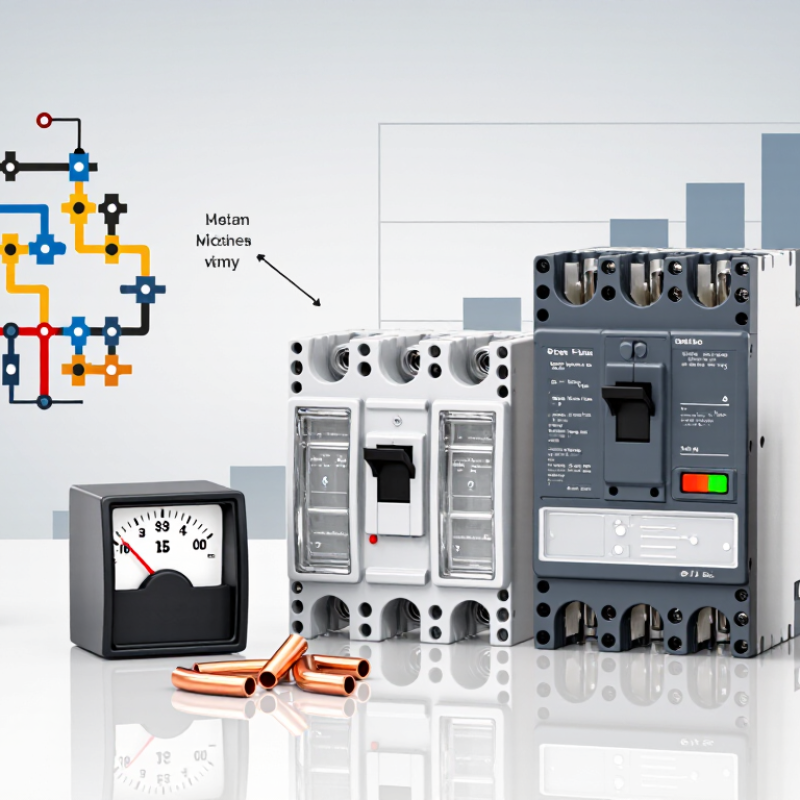
How to Choose the Right Power Breaker?

Identify Load Current and Apply the 125% Continuous-Load Rule

How to Choose the Right Power Breaker?

Start with the load current, not the breaker label. Under NFPA 70, a continuous load operates for three hours or longer and must be rated at 125% of its calculated value. For example, a circuit with 32 amperes of noncontinuous load and 16 amperes of continuous lighting load requires 52 amperes: 32 + (16 × 1.25). A 50-ampere breaker would be undersized for that calculation.

The conductor must also support the selected breaker. Check terminal temperature ratings, ambient temperature, conductor grouping, voltage, pole count, and available fault current. The breaker’s interrupting rating must meet or exceed the prospective fault current at the panel. NFPA Research reported that electrical distribution and lighting equipment contributed to approximately 35,150 home structure fires annually from 2015–2019, with about 470 civilian deaths and 1,100 injuries. Protection details matter.

Real panels rarely behave like a clean spreadsheet. Motors, transformers, and power supplies can create starting surges, while warm enclosures reduce conductor capacity. A larger breaker is not automatically safer. In a field review, the load schedule may show 48 amperes, but later-added equipment can quietly change the result. Recheck measured current, continuous operation, and conductor derating before final selection. The calculation can be simple. The installation is not.

Match Breaker Voltage, Pole Count, and Frequency to the System

Choosing a power breaker starts with the system’s voltage, not the appliance label. IEC 60898-1 covers breakers up to 440 V AC and 125 A for household applications. Industrial installations may require IEC 60947-2 equipment, rated up to 1,000 V AC. That difference matters. The IEA Electricity 2024 report expects global electricity demand to rise by about 4% in 2024, increasing pressure on existing distribution systems.

Pole count must match the conductors being protected. A single-phase circuit may use one or two poles, depending on local wiring practice and neutral requirements. Three-phase circuits commonly use three poles, while some systems require four-pole switching to disconnect the neutral. Field inspections often reveal a familiar mistake: installers match amperage but overlook pole arrangement. It is an easy shortcut. It can leave conductors energized.

Frequency deserves equal attention. A breaker tested for 50 or 60 Hz should not be assumed suitable for aircraft, laboratory, or variable-frequency equipment. At higher frequencies, interruption performance and heating can change. Check the breaker’s marked voltage, frequency, interrupting rating, and pole configuration together. Do not rely on voltage alone. IEC 60898-1 addresses 50 Hz and 60 Hz applications, but special systems may need separate verification. A label can mislead. The installation diagram, fault level, and measured supply conditions should confirm the selection before energizing the circuit.

Coordinate Breaker Ampacity with Load and Conductor Ratings

How to Choose the Right Power Breaker?

Coordinate Breaker Ampacity with Load and Conductor Ratings

A circuit breaker must suit the load and protect the conductors. Start with the equipment’s nameplate and expected operating conditions. For a continuous load, applicable electrical codes may require additional capacity, often 125% of the load. Check local requirements rather than relying on a rule of thumb. A breaker that is too large may fail to protect its wiring during an overload.

Conductor ampacity depends on more than wire size. Insulation type, ambient temperature, bundled cables, and terminal ratings can all affect its allowable current. The breaker rating should not exceed what the conductors and installation can safely support, subject to code-specific allowances. A neat calculation is not the whole story; real panels may include shared loads or older wiring that is hard to identify.

Verify Interrupting Capacity Meets Available Fault Current

How to Choose the Right Power Breaker?

Verify the breaker’s interrupting capacity against the available fault current at its installation point. A breaker may carry normal load safely yet fail during a short circuit. Interrupting capacity is measured at a specific system voltage, not as a universal number.

Start with the utility transformer data, service conductors, transformer impedance, and motor contributions. A qualified engineer should calculate the prospective fault current using these details. Do not estimate from the panel’s ampere rating. A 400-ampere breaker can still need a much higher interrupting rating.

Check the breaker label carefully. Confirm voltage, frequency, interrupting rating, and any conditions for series application. The rating must meet or exceed the calculated fault current, with suitable engineering margin. Field conditions matter. Long cable runs may reduce fault current, while a nearby transformer can increase it sharply.

Small details matter.

During a site review, inspect the equipment label, conductor size, transformer information, and previous fault-current study. Do not rely on an outdated report after a service upgrade. I have seen panels remain unchanged while transformers and feeder lengths changed. That assumption can create a serious gap between design records and actual risk. Recheck the calculation whenever the electrical system changes. Keep the study accessible for future maintenance and inspection.

How to Choose the Right Power Breaker?

Verify Interrupting Capacity Meets Available Fault Current

The breaker’s interrupting capacity should be equal to or greater than the available fault current at its installation point. The values shown are representative RMS symmetrical short-circuit currents in kA and must be confirmed by a site-specific fault-current calculation.

Check Product Compliance with UL 489 or IEC 60947-2

Choosing a power breaker begins with the standard required at the installation site. UL 489 applies to molded-case circuit breakers used in North American systems. IEC 60947-2 covers low-voltage circuit breakers in IEC-based installations. These standards are not interchangeable labels. Check the product’s certification and the project specification, then compare rated voltage, pole count, and interrupting capacity with the actual system. The breaker’s trip characteristics must also suit the load and conductor protection needs. Small label. Big consequence.

NFPA’s Home Electrical Fires report, covering 2015–2019, estimated an annual average of 46,700 U.S. home structure fires involving electrical failure or malfunction. These fires caused an estimated 390 civilian deaths and $1.5 billion in direct property damage each year. The figures are not specific to breaker failures, but they show why fault protection deserves careful verification. A compliant mark alone cannot confirm that a breaker fits a particular panel or fault level. That detail is easy to miss.

Tips: Confirm the available short-circuit current and choose a breaker with an adequate interrupting rating at the system voltage. For IEC applications, review Icu and Ics; for UL 489 applications, verify the interrupting rating. Check coordination, ambient-temperature limits, and enclosure conditions against the manufacturer’s technical documentation. If any value is unclear, pause and have a qualified electrical professional review the selection.

How to Choose the Right Power Breaker? - Check Product Compliance with UL 489 or IEC 60947-2

Selection Factor What to Check UL 489 Considerations IEC 60947-2 Considerations Practical Selection Check
Applicable standard Confirm the standard and certification requirements for the installation location, equipment type, and governing electrical code. UL 489 covers molded-case circuit breakers and related circuit-breaker types used in applicable North American installations. IEC 60947-2 applies to circuit-breakers within the scope of the IEC 60947 low-voltage switchgear and controlgear series. Use the standard required by the project or local authority. Do not assume compliance with one standard automatically establishes compliance with the other.
System voltage Check nominal system voltage, maximum operating voltage, frequency, and the breaker’s voltage rating. Verify the breaker’s marked ratings and suitability for the intended AC or DC system. Check the rated operational voltage (Ue) and suitability for the intended AC or DC system. The breaker’s applicable voltage rating must meet or exceed the system requirements; confirm the rating for the actual pole and circuit configuration.
Continuous current Determine the design load current and check conductor ampacity, ambient temperature, enclosure conditions, and any required derating. Check the breaker’s marked current rating and installation instructions. Applicable code requirements determine conductor and load sizing. Check rated current (In) and any manufacturer-stated derating for ambient temperature, mounting, or enclosure conditions. Select a rating that protects the circuit conductors and serves the load, while meeting the applicable electrical code and equipment instructions.
Fault-current capacity Establish the maximum available short-circuit current at the breaker’s installation point. Check the marked interrupting rating at the applicable voltage, commonly expressed in amperes of interrupting capacity (AIC). Check the rated ultimate short-circuit breaking capacity (Icu) and, where required, the rated service short-circuit breaking capacity (Ics). The applicable interrupting or breaking capacity must be adequate for the available fault current at the installation voltage. Compare ratings at the correct voltage.
Poles and circuit configuration Match the number of poles and switching arrangement to the supply, grounding method, and applicable code. Confirm the listed breaker configuration is suitable for the intended single-phase or three-phase circuit. Check the number of protected poles and the configuration of any neutral pole against the system design. Verify that all required ungrounded conductors are protected and that neutral switching or protection is handled as required by the system and code.
Trip characteristics Review overload and short-circuit response, adjustable settings, and the load’s starting or inrush current. Check the breaker’s trip type, ratings, and adjustment options against its listing and installation instructions. Review the trip unit’s time-current characteristics and settings, including long-time, short-time, instantaneous, or ground-fault functions where provided. Use time-current curves and load data to avoid unwanted trips while maintaining required conductor and equipment protection.
Coordination and backup protection Assess coordination with upstream and downstream protective devices, including any proposed series combination or cascading arrangement. Use only combinations permitted by the applicable listing, product documentation, and installation requirements. Check documented selectivity or backup-protection data for the specific devices, settings, voltage, and fault level. Do not rely on assumed coordination. Confirm the exact combination using approved documentation and the project’s protection study.
Installation environment Check ambient temperature, enclosure, pollution or contamination, altitude, vibration, and exposure to moisture or corrosive conditions. Follow the product’s marked conditions of use and installation instructions; verify any enclosure or environmental requirements. Check the manufacturer’s operating conditions and any applicable IEC ratings or derating instructions for the installation environment. Confirm the breaker is suitable for the actual site conditions, not only for the nominal electrical ratings.
Accessories and functions Identify required shunt trips, undervoltage releases, auxiliary contacts, alarms, remote operation, or communication functions. Verify accessory compatibility and any listing or installation restrictions for the specific breaker configuration. Verify accessory compatibility, control-circuit ratings, and the functions available with the selected breaker and trip unit. Check accessory ratings, wiring diagrams, and permitted combinations before ordering or installation.
Documentation and verification Review nameplate markings, certification records, installation instructions, test information, and project specifications. Confirm the required UL 489 certification or listing information for the exact product and intended use. Confirm the declared IEC 60947-2 ratings and supporting manufacturer documentation for the exact product configuration. Have a qualified electrical professional verify the selection, protection settings, and installation against the applicable code and project requirements.

Note: Ratings and certification details are product-specific. Always consult the breaker’s nameplate, technical documentation, applicable electrical code, and the authority having jurisdiction.