Projects

10 Tips for Choosing Online Metal Fabrication Services

Choosing an online metal fabrication service can feel like comparing identical steel doors. The real differences appear in tolerances, communication, certifications, and delivery control. A polished website is not enough. Your supplier must understand the material, the process, and the consequences of a small mistake.

W. Edwards Deming, a respected quality-management expert, said, “Quality comes not from inspection, but from the improvement of the production process.” That principle applies directly to online metal fabrication. Ask how the provider checks laser-cut edges, verifies bend angles, and manages material certificates. Request a sample inspection report. Look for practical evidence, not impressive wording. A reliable shop should explain its equipment, production capacity, finishing options, and quality procedures clearly.

Details matter.

A quotation should identify steel or aluminum grades, thickness, tolerances, quantities, tooling costs, and shipping terms. Confirm whether engineers review drawings before production. One overlooked hole can delay an entire assembly. One unclear revision can produce the wrong bracket in hundreds of pieces. These problems are avoidable, but not always. I have seen buyers focus heavily on price and discover later that packaging, surface treatment, or freight was excluded. That is an imperfect decision worth reconsidering.

This guide presents ten practical tips for evaluating online metal fabrication partners. It considers technical capability, communication speed, pricing transparency, quality evidence, lead times, security, and after-sales support. The goal is not to find the cheapest supplier. It is to find a capable partner that makes risks visible before metal reaches the cutting table.
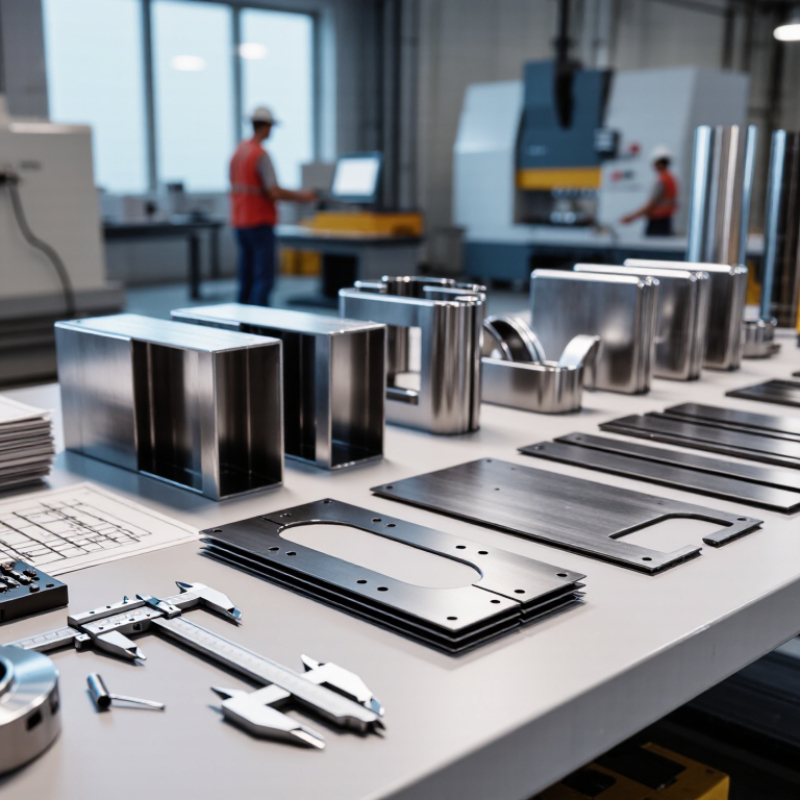
10 Tips for Choosing Online Metal Fabrication Services

Define Your Metal Fabrication Project Requirements

Define Your Metal Fabrication Project Requirements

Before requesting an online fabrication quote, describe the part’s real working conditions. Specify the metal grade, thickness, finished dimensions, quantity, surface treatment, and expected load. Include a clear CAD file, drawing, or marked-up sketch. The World Steel Association reported 1.89 billion tonnes of crude steel production in 2023. Material choice still affects availability, price, strength, and delivery time. A cheaper grade may fail in heat, vibration, or corrosion. That detail is easy to miss.

Tip: Write a one-page requirement sheet. State tolerances beside critical dimensions, not in a separate message. Mention holes, bends, welds, threads, and visible surfaces. If the part fits another component, provide its mating dimensions. A practical tolerance may suit a bracket but fail inside a moving assembly. This rule is imperfect.

Online suppliers also need production information. State whether you need one prototype or 5,000 repeat parts. Give the target delivery date, inspection expectations, packaging needs, and shipping destination. The 2024 Global State of Smart Manufacturing survey reported that 95% of manufacturers had invested in smart manufacturing technology or planned to invest. Digital quoting is faster, but it cannot repair vague specifications. Ask how the supplier verifies dimensions and records material certificates.

Tip: Request a sample inspection report. Confirm the measurement method, tolerance standard, and acceptance criteria before production. For safety-sensitive parts, ask for traceability and qualified welding documentation. Avoid writing “high quality.” Define it with numbers, standards, and evidence. A missed detail can become an expensive revision.

10 Tips for Choosing Online Metal Fabrication Services: Define Your Metal Fabrication Project Requirements

Before requesting an online fabrication quote, clearly define the material, thickness, quantity, dimensional tolerance, surface finish, and delivery requirements. The chart shows representative midpoint values from common sheet-metal planning ranges; final specifications should always be confirmed with the engineering drawing, applicable standards, and the selected fabricator.

Verify the Service Provider’s Capabilities and Experience

Choosing an online metal fabrication service requires more than comparing prices. The provider must match your material, tolerances, production volume, and finishing needs. Look for clear details about cutting, bending, welding, machining, and inspection equipment. Ask whether operators have experience with your metal grade and part geometry. A thin aluminum bracket behaves differently from a thick stainless steel frame. That difference affects heat control, distortion, and final fit.

Tips for verification: Request evidence, not broad claims. A capable provider should share relevant project examples, process photos, or sample inspection records. Check whether the examples resemble your parts in size, tolerance, and finish. You can also request a small prototype before approving a larger batch. This step may add time. It can reveal weak fixturing, rough edges, or unclear measurement practices.

Experience should be measurable. Ask how long the team has handled similar work and who reviews quality results. Confirm their ability to provide material certificates, dimensional reports, and revision control. Reliable communication matters when a drawing changes at 5 p.m. Test response speed with one specific technical question. An impressive answer is useful, but not proof. I have learned that even experienced shops can miss a tolerance when instructions are vague. Send marked drawings and define critical dimensions clearly.

10 Tips for Choosing Online Metal Fabrication Services - Verify the Service Provider’s Capabilities and Experience

No. Verification Dimension What to Confirm Useful Evidence or Benchmark Why It Matters Potential Warning Sign
1 Years of Relevant Experience Check how long the provider has produced parts similar in material, geometry, volume, and industry requirements. Request dated project examples, process history, operator qualifications, and customer references without relying only on general company age. Relevant experience helps reduce quoting errors, setup problems, distortion, and avoidable rework. The provider claims broad experience but cannot show comparable work or explain its production process.
2 Material Capability Confirm whether the service handles the required grades and thicknesses of aluminum, carbon steel, stainless steel, copper, or other specified metals. Ask for an approved material list, material certificates, traceability procedures, and thickness ranges for each process. Different metals require different cutting, forming, welding, heat-control, and finishing methods. The provider accepts the drawing without confirming alloy, temper, thickness, or material certification requirements.
3 Manufacturing Processes Verify access to the processes required for the part, such as laser cutting, waterjet cutting, CNC machining, bending, welding, or stamping. Review process-specific equipment specifications, maximum work envelopes, forming force, axis capacity, and subcontracting controls. A provider may offer online quoting while lacking the equipment needed to meet the design requirements in-house. Capabilities are described only with generic terms such as “all metal fabrication” and no technical limits are provided.
4 Dimensional Tolerance Confirm achievable tolerances for cut features, hole locations, bends, machined surfaces, welded assemblies, and finished parts. Compare the provider’s tolerance chart with the drawing’s general tolerances and any critical-to-function dimensions. Standard fabrication tolerances may not be sufficient for mating parts, precision holes, or functional assemblies. The quote promises unusually tight tolerances without identifying the process, inspection method, or added cost.
5 Quality Management Determine how the provider controls incoming materials, production inspections, nonconforming parts, and final release. Look for documented inspection procedures, calibrated measuring equipment, inspection records, and a quality-management certificate where required. Consistent quality depends on repeatable procedures rather than final visual inspection alone. The provider cannot explain how inspection results are recorded or how defective parts are isolated.
6 Inspection Equipment Check whether the available tools match the accuracy and size requirements of the project. Typical equipment may include calibrated calipers, micrometers, height gauges, surface plates, gauges, coating-thickness meters, or coordinate-measuring equipment. Suitable equipment allows the supplier to verify critical dimensions with objective measurements. Inspection relies exclusively on manual visual checks or uncalibrated tools.
7 Welding and Joining Expertise For welded work, confirm process knowledge, joint preparation, filler selection, heat control, and welder qualification. Ask for applicable welding procedures, welder qualification records, weld inspection methods, and requirements for distortion control. Welding can change part dimensions, appearance, strength, and corrosion performance through heat and residual stress. The provider quotes welded assemblies without asking about joint design, service loads, weld appearance, or inspection needs.
8 Finishing Capability Verify the available finishing options, including deburring, brushing, powder coating, wet painting, plating, anodizing, or passivation. Confirm surface-preparation standards, coating thickness controls, color or appearance requirements, masking procedures, and finish inspection. Finishing affects corrosion resistance, fit, appearance, electrical properties, and product life. Finishing is listed as an optional service with no defined preparation, thickness, appearance, or acceptance criteria.
9 Production Capacity and Lead Time Assess whether the provider can support prototype, low-volume, repeat, or higher-volume production within the required schedule. Request current capacity information, estimated queue time, batch-size limits, realistic manufacturing lead time, and a plan for schedule changes. A technically capable supplier may still fail if equipment availability or production capacity cannot support the order. The provider guarantees a very short delivery date before reviewing drawings, material availability, quantity, or finishing requirements.
10 Technical Communication and Data Security Evaluate drawing review, design-for-manufacturing feedback, revision control, file handling, and protection of confidential design data. Confirm accepted CAD formats, revision-identification practices, non-disclosure procedures, secure file transfer, and response time for engineering questions. Clear communication prevents production from using outdated drawings and helps identify manufacturability risks before fabrication. The provider does not acknowledge drawing revisions, lacks a clear approval process, or requests sensitive files through unsecured channels.

Evaluation note: The verification points above are based on standard metal-fabrication purchasing and quality-control practices. Requirements should be matched to the applicable drawing, material specification, inspection plan, regulatory requirement, and intended use of the finished part.

Evaluate Materials, Equipment, and Manufacturing Processes

10 Tips for Choosing Online Metal Fabrication Services

Evaluate the material before evaluating the price. Ask whether the shop understands your alloy, thickness, temper, and expected working environment. Request material certificates and confirm that each batch can be traced. Small differences in steel grade can affect bending, welding, corrosion resistance, and final strength. Ask for evidence. My first assumption was wrong once; a cheaper sheet created distortion during forming.

Review the equipment and its working limits. Laser cutting suits clean profiles, while plasma may handle thicker plate efficiently. Waterjet cutting can reduce heat distortion on sensitive materials. Check the machine’s maximum thickness, cutting accuracy, and bed size. Confirm that press brakes can achieve your bend radius without marking the surface. Welding equipment also matters. Skilled operators should control heat input, joint preparation, and shielding conditions. Details matter.

Study the manufacturing process, not only the finished sample. Ask how files are checked, fixtures are designed, and tolerances are inspected. A reliable provider should explain its measurement tools and inspection records clearly. Review deburring, surface finishing, coating preparation, and packaging methods. These steps often decide whether parts assemble smoothly. Confirm production capacity and communication response times, especially for revisions. A polished website proves little. Test one small batch first, then examine edge quality, hole position, flatness, and finish under normal lighting. Do not assume every quoted tolerance is realistic; some designs need adjustment after fabrication feedback.

Compare Pricing, Lead Times, and Customization Options

Choosing an online metal fabrication service starts with a careful pricing comparison, not a tempting headline quote. In my project reviews, the lowest estimate sometimes excluded setup charges, finishing, packaging, or shipping. Ask for an itemized quotation covering material grade, thickness, cutting, forming, welding, inspection, and delivery. Clarify whether taxes and tooling are included. Small details matter. A $40 difference can disappear after revisions.

Lead time needs equal scrutiny. Request a production schedule with drawing approval, queue time, fabrication, quality checks, and dispatch dates. A supplier promising five days may mean five working days after payment and final file approval. That distinction can disrupt installation planning. Ask how delays are reported and whether rush work changes the price. I once trusted a broad delivery window and had to rearrange a workshop crew; the mistake was mine, but the schedule was vague.

Customization should be judged through capability, not attractive upload forms. Confirm minimum bend radius, hole tolerances, weld requirements, surface finish, and acceptable file formats. Request a sample inspection report or a small first article for complex parts. Reliable providers explain what cannot be held consistently. That honesty is valuable. Compare revision policies, technical support, material traceability, and packaging protection. If a design contains tight tolerances, ask an engineer to review it before ordering. Online convenience helps, but it does not replace a clear drawing and measurable acceptance criteria.

Assess Quality Control, Certifications, and Customer Support

Choosing an online metal fabrication service requires more than comparing prices. Quality control should be visible in daily work. Ask how operators check dimensions, weld penetration, surface finish, and material thickness. A reliable shop can provide inspection reports, production photos, and material traceability records. Small details matter. A clean measurement sheet builds confidence.

Certifications can support a supplier’s credibility, but they should not replace practical evidence. Check whether the certification is current, relevant, and issued by a recognized independent body. ISO 9001, welding qualifications, and documented inspection procedures may indicate disciplined processes. Still, a certificate does not guarantee perfect parts. Review sample work, tolerances, and handling of previous defects. I once accepted a supplier after seeing impressive documents, then discovered unclear packaging controls. That mistake was avoidable.

Customer support reveals how the service performs under pressure. Before ordering, ask about response times, design file reviews, engineering questions, and change requests. A dependable team should explain problems clearly instead of hiding delays. Confirm who approves revisions and how costs are recorded. Request a named contact when the project is complex. Fast replies help, but careful replies matter more. Try one technical question before committing. Their answer may show whether they understand your drawings or simply want the order. Perfect communication is unlikely, so document important decisions and check every revision.